

Path of Exile 2 currency is mostly orbs: items you use to modify gear that also serve as money in trading. There is no blacksmith with fixed recipes. Instead, orbs turn normal items into magic and rare ones, add modifiers or reroll values. Here you’ll find every important orb and what it does, a step-by-step walkthrough and tips on which orbs to use and which ones you’re better off trading.
What is currency in Path of Exile 2?
In Path of Exile 2, currency means every item you use to modify other items. The most important ones are orbs. They drop as loot, stack in your inventory and are applied to an item with a right-click. Because every player needs them, the same orbs are also the medium of exchange in trading.
There’s also gold. You need gold for vendors, for respeccing the passive tree and for trade fees. As things stand, you can’t trade gold. Some orbs also drop as shards: 10 shards automatically combine into a full orb. You’ll find all currency in our currency overview.
Which rarities do items have?
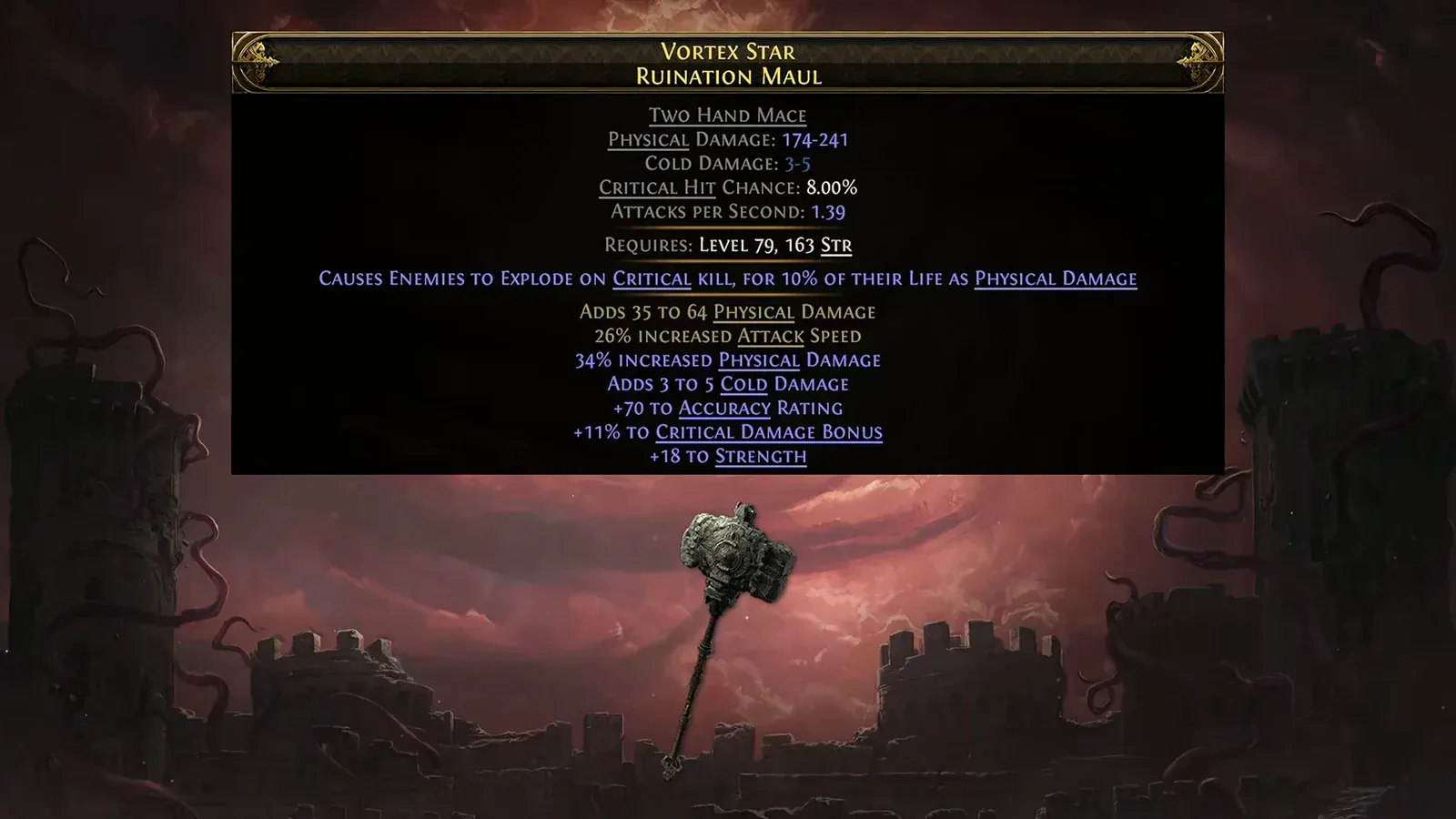
Before you use orbs, you need to know rarity, because almost every orb only works on a specific tier. Path of Exile 2 has four rarities:
| Rarity | Modifiers | How you get it |
|---|---|---|
| Normal | none | as loot, the base for everything else |
| Magic | up to 2 | loot or Orb of Transmutation |
| Rare | up to 6 | loot, Regal Orb or Orb of Alchemy |
| Unique | fixed modifiers | loot or, with luck, an Orb of Chance |
Which orbs are there and what do they do?
The table lists the most important orbs with their effect according to the in-game description and the level from which they drop. A dash means there’s no fixed level. You’ll need most of them during the campaign already:
| Orb | Effect | Drops from level |
|---|---|---|
| Orb of Transmutation | turns a normal item into a magic one with 1 modifier | – |
| Orb of Augmentation | adds a random modifier to a magic item | – |
| Regal Orb | turns a magic item into a rare one and adds 1 modifier | 5 |
| Orb of Alchemy | turns a normal or magic item into a rare one with 4 modifiers | 5 |
| Exalted Orb | adds a random modifier to a rare item | 5 |
| Chaos Orb | removes a random modifier and adds a new one to a rare item | 12 |
| Orb of Chance | turns a normal item unique with luck or destroys it | 12 |
| Orb of Annulment | removes a random modifier | 35 |
| Divine Orb | rerolls the numeric values of modifiers | 35 |
| Vaal Orb | modifies an item unpredictably and corrupts it | 35 |
| Fracturing Orb | makes one random modifier of a rare item with at least 4 modifiers unchangeable | – |
| Hinekora’s Lock | previews the result of the next currency used on an item | 46 |
| Mirror of Kalandra | creates a mirrored copy of an item | 35, extremely rare |
The Orb of Transmutation, Orb of Augmentation, Regal Orb, Exalted Orb and Chaos Orb also come in Greater and Perfect versions. They drop later, the Greater Exalted Orb from level 72 and the Perfect one from level 79, for example, and mostly matter in the endgame.
How do you improve an item step by step?
The classic path from a normal item to a good rare one uses several orbs in a row. Here’s how:
- Pick a base: take a normal item with a high item level and a fitting base type, for example a weapon with high base damage.
- Make it magic: an Orb of Transmutation gives it the first modifier, an Orb of Augmentation the second.
- Make it rare: the Regal Orb makes it rare and adds a third modifier.
- Fill it up: use Exalted Orbs to fill the remaining slots up to six modifiers.
- Fix it: swap a bad modifier with a Chaos Orb or remove it with an Orb of Annulment. Both are random and can hit a good one too.
- Improve the values: once the modifiers are right, the Divine Orb only rerolls the numbers.
A special route is Essences: they make a magic item rare and add a fixed modifier depending on the item type. Most come in four tiers. Omens, in turn, sit in your inventory and change how the next matching orb works. Both are more for advanced players.
How do you improve quality and sockets?
Besides modifiers, there is currency for quality and sockets. Quality improves an item’s base stats; sockets add extra effects. The most important ones:
- Blacksmith’s Whetstone: more quality for martial weapons.
- Arcanist’s Etcher: more quality for wands, staves and sceptres.
- Armourer’s Scrap: more quality for armour.
- Glassblower’s Bauble: more quality for flasks.
- Gemcutter’s Prism: more quality for skill gems.
- Artificer’s Orb: adds an augment socket to a weapon or armour, where you place runes and soul cores.
- Jeweller’s Orbs: the Lesser, Greater and Perfect Jeweller’s Orb set a skill gem to 3, 4 or 5 support gem sockets.
How do you trade currency for other currency?
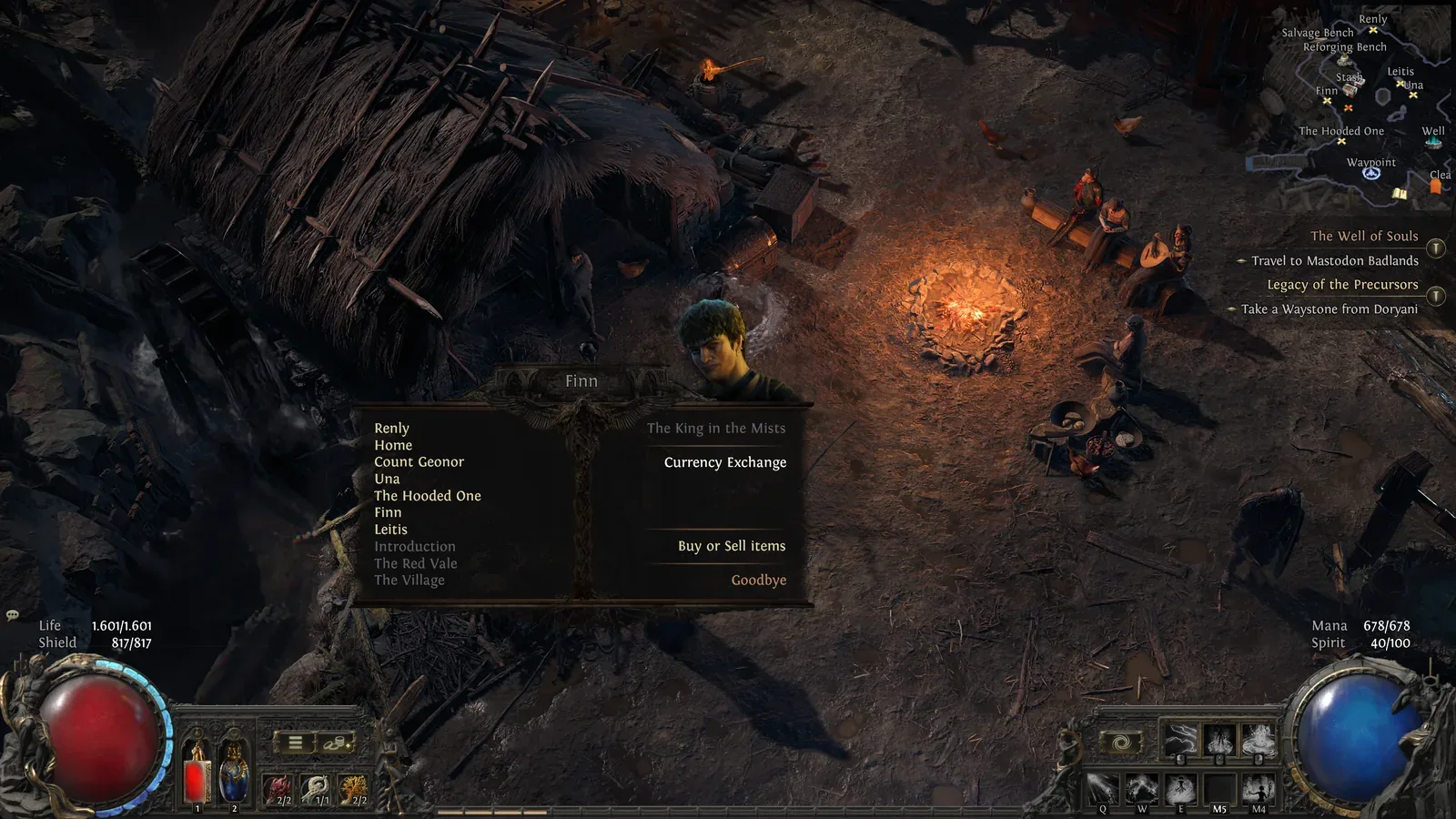
You swap orbs directly for each other on the Currency Exchange, which you open by talking to a vendor in town. There you offer Chaos Orbs, for example, and get Exalted Orbs in return without having to message another player. Every trade costs a gold fee that depends on the orb: 800 gold for a Divine Orb, for example, and 25,000 gold for a Mirror of Kalandra.
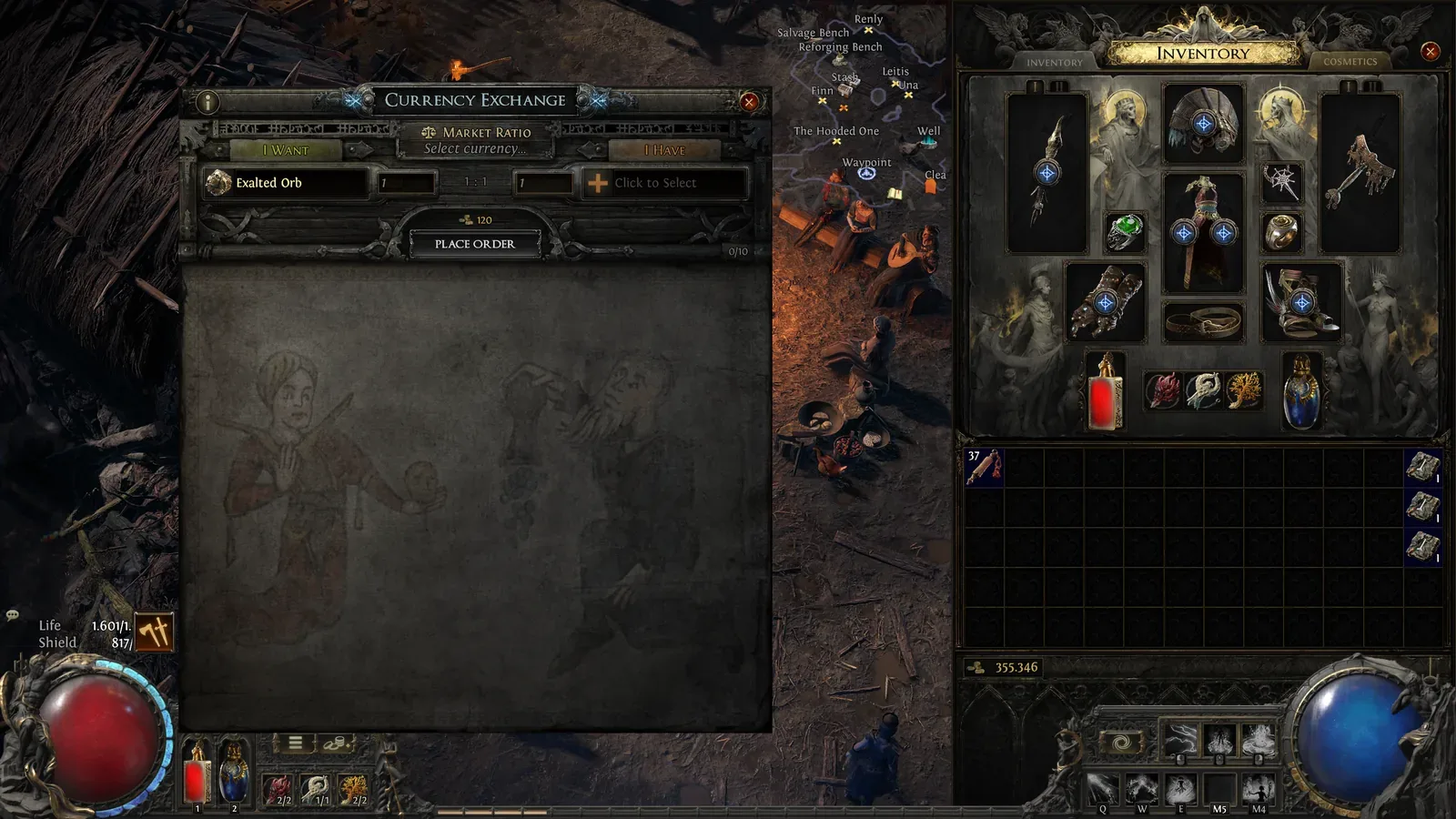
Players set the exchange rates, and they shift with supply and demand. Rare orbs like the Divine Orb are worth far more than common ones like the Orb of Transmutation. If you don’t want to trade at all, play Solo Self-Found and find every orb yourself. Our Path of Exile 2 trade guide explains how trading works. The basics for getting started are in our Path of Exile 2 beginner guide.
Which orbs should you use and which should you keep?
Not every orb should go straight onto your gear. As a rule of thumb:
- Use freely: Orbs of Transmutation, Orbs of Augmentation and Regal Orbs are common. Use them generously on weapons and armour during the campaign; it gives you noticeably more damage and defense.
- Use with care: Exalted Orbs and Chaos Orbs are also in demand as currency. Use them on items you’ll wear for a while.
- Better to trade: Divine Orbs and anything rarer are worth a lot in trading. Often they get you a finished item that beats anything you’d roll yourself.
- Collect: shards turn into a full orb at 10. So keep them.
What changes with the full release?
With the full release, the Conquerors of Wraeclast league adds a new crafting system: Reforging. Using a new material from the treasuries of conquered castles, you replace unwanted modifiers with new random ones that are fractured afterwards and can no longer be changed. Our Conquerors of Wraeclast league guide explains exactly how it works.
Whether the existing orbs change will only become clear with the patch notes. We’ll update this guide then. You can already look up all items and modifiers in our modifier database.
Frequently asked questions
What is the most valuable currency in Path of Exile 2?
The Mirror of Kalandra is the rarest and most valuable currency; it copies an item. In everyday trading, Divine Orbs are among the most valuable currencies.
How many shards make an orb?
10 shards automatically combine into a full orb, for example 10 Transmutation Shards into an Orb of Transmutation.
Can I trade gold?
As things stand, no. You need gold for vendors, respeccing and fees, for example on the Currency Exchange.
What does a Vaal Orb do?
It modifies an item unpredictably and corrupts it. You can’t modify corrupted items afterwards.
How do I get more support gem sockets?
With Jeweller’s Orbs. The Lesser one sets a skill gem to 3 sockets, the Greater one to 4 and the Perfect one to 5.


Comments
Loading comments …
Join the discussion with a free account
Anyone with a RaidDex account can comment – one click with Discord, Steam or Battle.net is enough. Your progress is also backed up and the same on all your devices.
Already have an account? Sign in
One click with Discord, Steam or Battle.net is enough – no new password needed. Whatever you have already saved in this browser moves into your account when you sign in. Only you can see your profile.