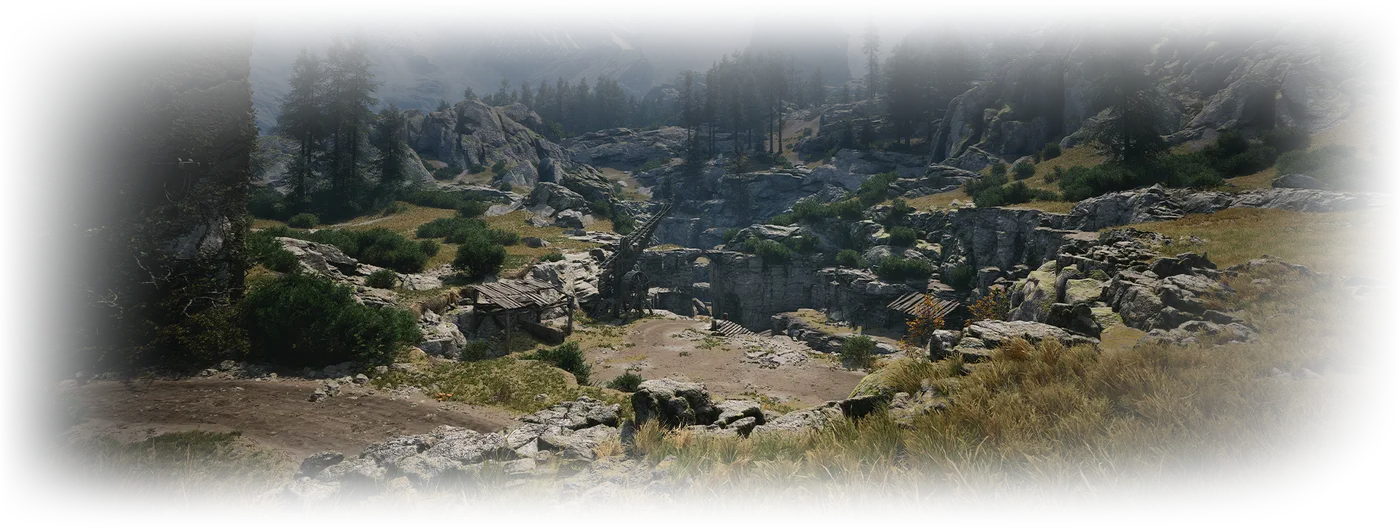
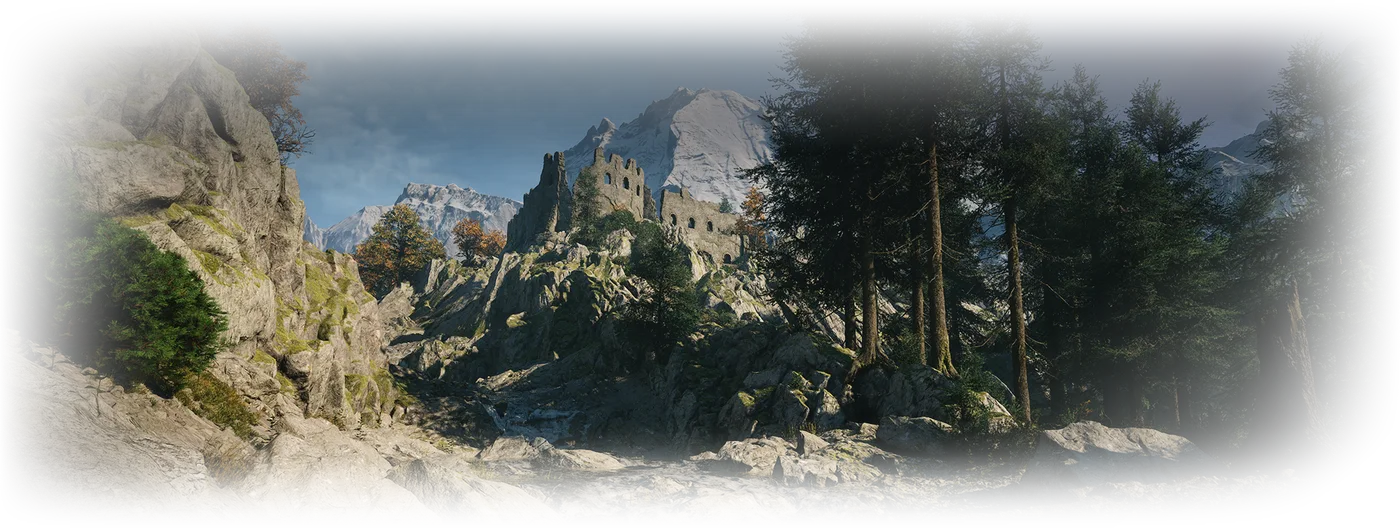
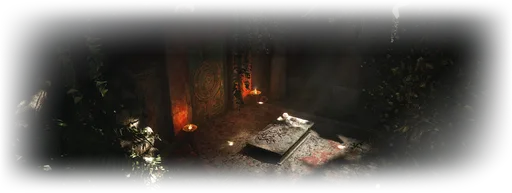
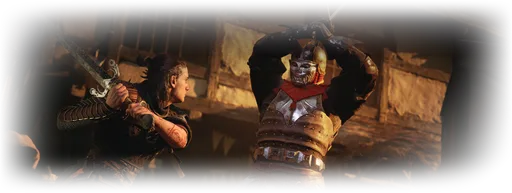
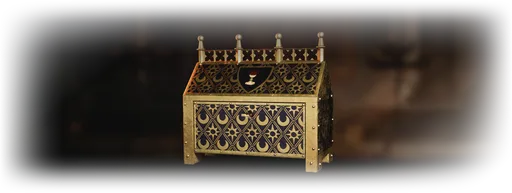
The regions of Vale Sangora with their enemy levels, and the legends you pick up along the way.

Regions

Laslea Glen

Laslea, my home, was once mainly a mining village. But after Brencis became knyaz, he closed down the silver mines. Since then, we've been farmers and herders. Our life may seem peaceful and quiet to some, but it's mainly back-breaking labor from dawn till dusk – no matter the weather. If we don't have enough food before winter, we'll starve.

Briar Sloughs

Briar Sloughs isn't far from my home village, Laslea, but I don't go there often. Its eastern part is mostly a swamp, which – especially at night – always gave me the chills. The western part, on the other hand, is full of Brencis's soldiers, stationed at Stoneward Post, one of the largest military camps in the valley. Either way, I've never had much need to visit those parts, other than on the way to Svartrau. But that might change now...

Maragir Wealds

The village of Maragir is nestled in a dense, lush forest. Some of the villagers hunt there, now that Brencis has made that legal for peasants – or they pick berries and mushrooms. Others earn their living as lumberjacks. And they all love their boyar, Ambrus. At least, that's what you hear whenever you set foot in Maragir.

St. Tyna's Grove

Back in the day, St. Tyna's convent was run like clockwork. I bet the prioress never complained of a shortage of candidates for the novitiate. If you were a third daughter with no dowry, or if you were giving your parents a hard time and 'needed some discipline', Saint Tyna's was where you ended up.

And then the plague came, and a wave of pilgrims flooded the convent. Some of them came to ask the saint for protection, others – already infected – to pray for a miracle. The sisters worked their fingers to the bone tending the sick… until, in the end, there was no one left. Rumour is, all the pilgrims died, and so did the nuns. The convent and the surrounding woods fell silent. But not for long...

Svartrau City

Svartrau is the city at the heart of Vale Sangora – and the place where all roads lead.

It used to be a rich and lively town, but the last two years have taken their toll. Many people died of the plague, others – mostly nobles – were killed by Brencis after his coup.

The new knyaz might have put an end to the plague, but there have been other problems. Today, those debilitated or orphaned by the plague flock to the cathedral steps, hoping for a warm meal. After dusk, they crawl back to the shadows, while vrakhiri blood-addicts and other shady types take over the streets. Despite the guards' best efforts, Svartrau is hardly a safe place.

On the other hand, it's still the liveliest place in the valley. It consists of four districts.

The rich merchants – as well as those few nobles who bent the knee quickly enough for Brencis to spare them – live in Silberstein.

The place where merchants sell their goods is called Altenmarkt, and is by far the most crowded part of the city.

The Middens, on the other hand, are almost abandoned. This is where the plague hit the hardest. Only beggars and shady characters dwell there nowadays.

And then, there's Neustadt – a relatively small, Jewish district. The Jewish community keeps mostly to itself and tries to avoid provoking the knyaz. They understand better than most how precarious our lives are now.

Boar's Back

The region of Boar’s Back was once known mainly for the Shrike’s Crag quarry – until, years ago, Knyaz Skender turned the place into a slaughterhouse, killing peasants who dared oppose his unjust rule. Today, Shrike’s Crag is abandoned and people give it a wide berth.

That plus the thick forests covering Boar’s Back make it a good place to lie low, which has spawned rumours of the manumits having many of their hideouts there.

However, it's also a part of the valley overseen by the mad Boyar Bakir, a cruel and unpredictable monster.

Rockfalls

The region of Rockfalls owes its name to the landslides and avalanches whose roar so often echoes over the peaks. They're too frequent to be of nature’s doing, some say. There are legends of mountain giants or ancient sites of volatile magic causing these phenomena… but since few people have actually wandered through Rockfalls and survived, we still don’t know the truth.

Maybe the uriashi, whose villages are rumoured to lie somewhere in Rockfalls, know more. Unfortunately, they aren’t eager to share any of their people's secrets.

The Silts

The Silts is part of Boyaress Xanthe's fiefdom. It's a secluded place far from the valley's centre. Bakir has his manor there as well, and it's where he holds his infamous Lunar Tournaments. Brencis seldom casts his gaze over this part of the valley – whether by neglect or by choice – and his boyars do as they please in the Silts, undisturbed by anyone.

Tantari Woods

A century ago, a large group of Tatars came to our region with the Mongol army, led by Batu-khan. Some of those Tatars, tired of warring, began looking for a place to settle. Soon they came to Vale Sangora and in exchange for the right to herd sheep, they pledged their allegiance to house Dragosti.

Just like the Jews of Neustadt district in Svartrau, the Tatars now live predominantly in one place – the village of Tantari. And just like with the Jews, I don't think it's entirely by their own choice. Our world isn't a just place for anyone, but for some – it's even less so.

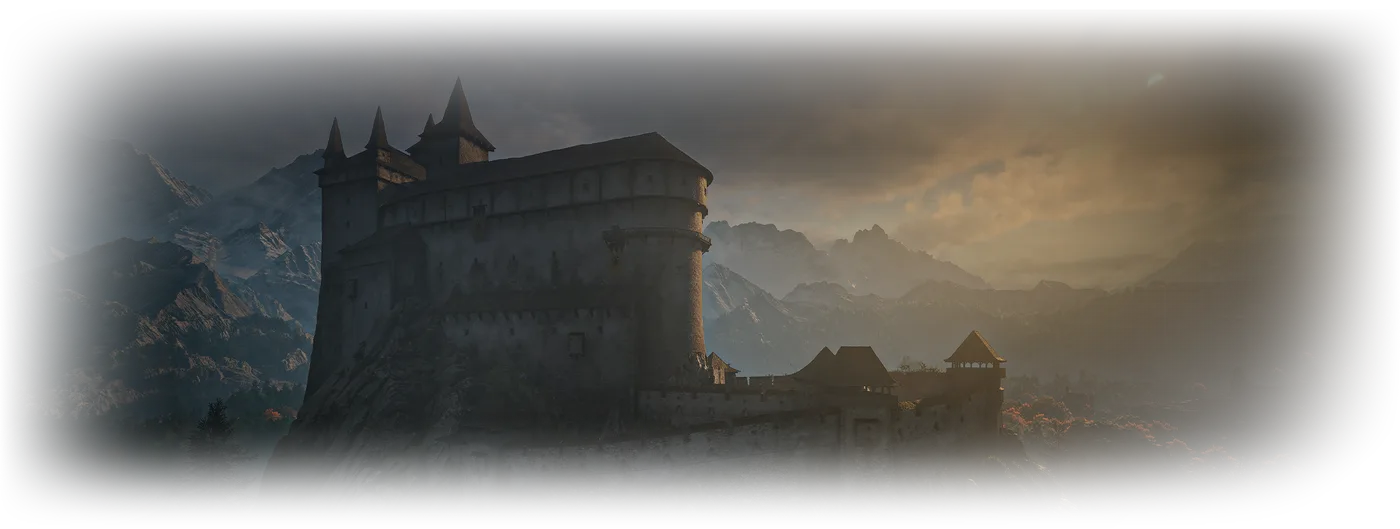
Greifberg Castle

Looking at Greifberg Castle, you might think it has towered over Svartrau for centuries. But it was actually built just thirteen years ago. Before that, a much less impressive stronghold stood there – one made mostly of wood, with only a few crucial parts fortified with stone.

But I heard that Knyaz Skender had been fantasising about a proper castle for years. He started building it right after taking over. And then, in AD 1333, after the infamous Shrike's Crag massacre, he pressed on even harder, possibly worried the rebels might strike again. They never did, and three years later the castle was finished.

Skender boasted that this imposing castle would keep all his enemies at bay… But its walls were no great obstacle for Brencis. He took over the castle, along with its dungeons, where he imprisoned my family.

Anachora

Anachora

For thousands of years we've been wondering what happens to us after we die. Is there an afterlife? For vrakhiri there is, but it's far from hospitable. It's called Anachora.

When one vrakhir dies by another vrakhir's hand, the killer may decide to absorb their victim's soul, carrying the dead spirit inside themselves. If the killer refuses, victim's soul is trapped in Anachora.

At that point, there's no way back. The dead souls are condemned to wander through the cursed plains forever, constantly watched by something… An unnamed presence, hidden behind the clouds, whose gaze sinks into the vrakhiri's souls the way fangs sink into flesh. Who is it? And what does it want?

Legends

Vale Sangora

Our home, Vale Sangora, is a secluded valley in the Carpathian Mountains.

From what I know, it's had a troubled history, constantly being fought over and passed from hand to hand. At times it's belonged to the Moravians, the Kievan Rus or the Serbian Voivodeship. It's been pillaged by Hungarians, Mongols, and Tatars. In the last decades before Brencis, it belonged to the Dragosti family, who ruled it with an iron fist.

Nowadays, under Brencis, Vale Sangora is cut off from the outside world. With all the bridges destroyed and the mountain passes blocked, there's almost no way to get in or out.

Magic

Vrakhiri may have powers humans can only dream of, but it turns out that there are other arcane arts out there... And Anca showed me how to access them. To cast a hex you first have to carve its symbol on your skin, and then draw some of your own blood. It feels... wrong, but also good.

And the cost? For one, it's forbidden. In places where the Inquisition operates, casting a hex or even being seen with symbols on your arms would put you in prison, or worse. And besides, who knows what the source of these powers is, or what we let into our souls when we practise this dark art?

But I don't have a choice. If it helps me defeat Brencis, I'm going to use it, no matter what.

Blood Covenant

After becoming the Knyaz of Vale Sangora, Brencis banned all religion – except for his own, which he calls the Blood Covenant. It is now the official and compulsory faith of all who live in the valley.

Though Brencis hasn't gone so far as to call himself God, he clearly tries to paint himself as God's messenger and His chief disciple. He claims he's the only one capable of protecting us from the plague, outside influences and any calamity that may threaten us in the future.

The Covenant requires all Brencis’s subjects to feed him with their blood. In turn, Brencis feeds us with his own blood, which cures all our illnesses. Everyone has to attend Blood Mass, and – of course – nobody is allowed to criticise the Knyaz, for that is considered blasphemy.

And that's it. Just a few simple rules, easy to remember. And yet, they have turned all our lives upside down.

Carpathians

The Carpathians are a range of high mountains, stretching in a long arc through the heart of Europe. Even in the summer, they aren't easy to traverse. And in the winter, when snow blocks the mountain passes, the Carpathians become an insurmountable wall.

I guess that is why Brencis chose Vale Sangora to be his realm. When it comes to controlling borders, it's hard to think of a better place.

Silver Mines

Vale Sangora is a place of many riches, some of them – like silver – hidden deep underground. It’s this precious metal that first drew people to our remote valley – and the foundation upon which the city of Svartrau was built.

For hundreds of years, Vale Sangora was a land of miners, but all that changed two years ago. Since silver is one of the few things that can weaken a vrakhir, Brencis ordered all the mines to close. As for the men who had worked there, they became farmers. And not many of them complained, since there's hardly any tougher job than mining.

Still, the silver is there, waiting to be used against Brencis and his court.

Svartrau Cathedral

Until Greifberg Castle was built, the most impressive structure in Svartrau was its cathedral, dedicated to St. Mihai.

It stands where the first church in Vale Sangora used to be – the one built by Tobias, the patron saint of the valley. The cathedral replaced the old church almost two hundred years ago. Over the years, it's been rebuilt many times and additions have been added, so as the city grew bigger, so did its church.

And then, a year after Brencis took over (almost to the day), one of the towers started to crumble. Nobody knew why – it hadn't been struck by lightning or weakened by heavy rains... But of course, people started whispering it was a bad omen, or a punishment for trying to cover the saints's images with Brencis's own likeness.

This only made Brencis double down on his efforts to reclaim the cathedral for him and his new faith, the Blood Covenant. He is adamant about rebuilding the tower before the winter – larger and sturdier than it was before.

Black Death

The plague, or 'the great pestilence', broke out two years ago. For all we know, it's still spreading like wildfire through most of Europe.

In addition to being deadly, the disease causes much suffering. It starts with swollen lumps, or buboes, that appear in the groin or armpits. Some of those swellings grow as large as an apple or an egg. If you open them, they bleed. And from them, the disease spreads to all other parts of the body. After a while, black spots appear, followed by fever and vomiting. Most of the infected die within a few days.

People do what they can to avoid getting infected. Some stay at home and refuse to talk to anyone. Others flock to churches, praying for protection and seeking forgiveness for their sins, which – according to some – are why God brought the plague on us.

But, as it turns out, there is a remedy. Vrakhiri blood has the power to cure the infected and prevent others from catching the disease. That is how Brencis healed the people of Vale Sangora, but I don't think he plans on sharing his blood with anyone outside the valley.

And so, the plague rages on.

Golden Age

The tales say we're just a pale imitation of the past, an era known as the Golden Age. While we struggle just to stay alive, the champions of old feasted with the gods. They used to marry them and have children with them. They fought glorious battles against giants and demons, some of whom may have been ancient vrakhiri – and they had no trouble defeating these monsters.

Little is left of that world – mostly crumbling ruins of ancient tombs and temples. Those few who dare venture into their depths hope to find gold, jewels and other treasures… but mostly find death instead, and are never seen again. Do they just get lost in the ancient mazes? Or does something else prey on them there?

Arimaspians

We don't know much about ancient peoples who lived in Vale Sangora before us. Anca says they were called Arimaspians, and that some of them were nomads, while others built cities and temples... but that's about it.

Were they anything like ancient Greeks or Romans whose works Anca let me read? What gods did they believe in? Did they value peace – which seems unlikely – or did they wage neverending wars? And what treasures did they leave behind in their tombs, mausoleums and shrines?

And then, an even bigger question: if once they flourished and now they're gone, will the same happen to us?

Vrakhiri Court

Brencis doesn't rule alone. I don't know if all vrakhiri do the same, but in Vale Sangora they've formed a court, consisting of the knyaz and his three boyars: Bakir, Ambrus and Xanthe. Not all three of them were sired by Brencis, but they all obey him. Could they stand up to him? Could they kill him? Could he kill them? I have no idea, but they clearly share some sort of a bond.

Manumits

Soon after Brencis's coup, people started whispering about a group formed to bring him down. At first, they were just called 'the rebels', but after a few months a new name started popping up: 'the manumits'.

They have a leader, known as 'Crake', but his true identity remains a well-kept secret. Some even say he doesn't exist at all.

They are too few and too weak to oppose Brencis openly, at least for now. Instead, they try to make his life harder by destroying his supplies, attacking convoys with prisoners or blood transports, and by killing his soldiers, whose ears they cut off and take as trophies.

14th-Century Europe

Some say we're living in the end of days.

At the moment, almost all of Europe is being ravaged by the great plague – an unstoppable and merciless pestilence that wipes out entire towns and villages. Meanwhile, two great powers, France and England, are warring over the French throne, possibly willing to set the entire continent on fire to get what they want. And any day now, the Mongols or the Turks may come from the East, burning and pillaging. Nothing is certain anymore, the world seems to be crumbling beyond repair.

But even without any of these things, our lives would be far from easy. We work for our lords, who feed off us like leeches. Most of what we produce, we're forced to hand over to our masters, who have little to no sympathy for our suffering. It doesn't matter how smart or hardworking we are – if we were born peasants, we'll die as peasants.

It's hard to wonder that in such a world, the new order Brencis has established in Vale Sangora might seem like a blessing, even if it's just a clever lie.

Banditry

Most of the war chronicles I've read were about valiant knights and their glorious deeds. But I know that isn't what war's really like. Many battles are fought by mercenaries, loyal to their king or knyaz for only as long as he's paying them. And when he stops, they start looking for a new opportunity. They don't always find it, though, and they become bandits, turning against the very people they were meant to protect. They rob and destroy villages, they kill and harass peasants. And they're much worse than regular troublemakers, because they are usually skilled, and also numbed by the many battles they fought. There are places where they're the ones who hold all the power, and terrorise commoners and rulers alike.

Blood Guard

Most of Brencis's troops are just regular soldiers, but blood guards are different. They are strong, ferocious and tireless in a fight. Defeating even a single one of them is a remarkable feat - and they rarely fight alone.

But how did they gain their powers? Allegedly it is Xanthe's doing. Her dark rituals made them who they are. They may have had families and ambitions once, but now they want but one thing - to serve Brencis. And they will rather die than abandon him.

Brencis's Army

Brencis' forces are different from what other rulers have at their disposal. For one, there are the three vrakhiri henchmen: Bakir, Ambrus, and Xanthe, ready to fight alongside Brencis whenever needed. Beside them, the knyaz may also count on the fiercely loyal blood guards, created by Xanthe. And then, there are also uriashi - strong, obedient, and often eager to prove their worth.

But the majority of the troops are just regular soldiers, who two years ago were still loyal to knyaz Skender. I bet they wouldn't fight anyone if they didn't have to. But they're still what stands between me and the vrakhiri, so - whether I want it or not - they are my enemies.

Vrakhiri Blood

Vrakhiri blood may look just like ours, but it's much, much more. For one, it is where their power resides. They say when one vrakhir is killed and drained by another, the killer gains the victim’s talents.

For humans, the blood works differently. A few drops, mixed into wine, will heal you from any illness.

If you drink more, you'll get even stronger. That’s how blood guards, Brencis’ elite force, are created. It’s believed they’re fed Xanthe’s blood regularly, and become fully dependent on it.

This also happens to others who drank too much vrakhiri blood. They start craving it - until it consumes them entirely and makes them lose their mind. This may sound like a horrible fate, but the streets of Svartrau are filled with addicts willing to risk it.

Dawnwalkers

Dawnwalkers, like me... Who are we, really?

We carry a vrakhir's fang in our hearts and share some of our creator's powers, but we never fully transform. During the day, we're still who we used to be, as if nothing happened - and it's almost possible to forget...

But then, at night, the hunger kicks in. The rabid beast wants to be fed... An unnamed god demands a blood offering...

Will this kill me, eventually? Make me lose my mind, forget who I was? Am I damned? Beyond salvation?

We would like to use Google Analytics to measure how RaidDex is used. Google sets cookies and processes usage data for this – only if you agree. You can change your decision at any time under “Cookie settings” at the bottom of the page.

Privacy Imprint