Gwent: for many a diverting game of cards, for others, a noble pursuit, for some – a crippling addiction which devours their every coin and every waking moment. These last can be found most frequently among the dwarves, the game’s inventors and most passionate devotees. Their devotion extends to gwent’s paraphernalia, its cards most of all, which they craft with great care and skill - in fact, cards painted by dwarven masters are often considered miniature works of art. In past times they devoted equal attention to whittling the clubs which contestants once kept at their sides, to bash each other about the head with in the case of an argument. As brawls grew less common, the clubs became implied threats more than used weapons, until eventually falling into disuse and near oblivion.
Today gwent players can be found almost everywhere, from the Skellige Isles (where the game was introduced by the druid Ermion) to the Northern Realms and the Nilfgaardian Empire.
In gwent, the play of cards mimics the dueling of two armies. The playing field is divided into two parts, each split into three rows. Nearest to the center stand units who fight at close quarters, behind them, archers and other such ranged attackers, and furthest back, machines and creatures used for siege purposes. Both players wield decks made up of a minimum of 22 unit cards and a maximum of 10 special cards, and each must also contain a leader card. The player who wins the toss of a coin (originally: the dwarf whose wife has the longest beard) plays first. Each player draws at random 10 cards from his deck and then is allowed to redraw 2 of these before the laying of cards begins. Each round is won by the player who has played cards of the greatest value. The first to achieve 2 victorious rounds wins, meaning a maximum of 3 rounds are played. The winner’s prize is agreed upon by the players before each match – most often, the wager is a bounty of coin or a rare card
The heart of the players’ armies, the unit cards, come in three types:
close combat units,
ranged combat units,
siege units.
Each such card is assigned a strength rating and may additionally possess special abilities.
There are also special cards which have no strength rating but instead influence the course of the game in other ways.
Unit cards depicting famed heroes not only have unusually high strength ratings, but also have the added benefit of ignoring the workings of all special cards. These are the rarest and most coveted of gwent cards. Most frequently they must be won from top players or purchased at a great price from collectors.
The cards in classic gwent are divided into four factions:
The Northern Realms, leader: Foltest
The Nilfgaardian Empire, leader: Emhyr var Emreis
Monsters, leader: Eredin Bréacc Glas
The Scoia'tael, leader: Francesca Findabair.


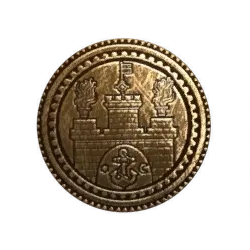 Value: 10 crowns
Comments
Loading comments …
Join the discussion with a free account
Anyone with a RaidDex account can comment – one click with Discord, Steam or Battle.net is enough. Your progress is also backed up and the same on all your devices.
Already have an account? Sign in
One click with Discord, Steam or Battle.net is enough – no new password needed. Whatever you have already saved in this browser moves into your account when you sign in. Only you can see your profile.